

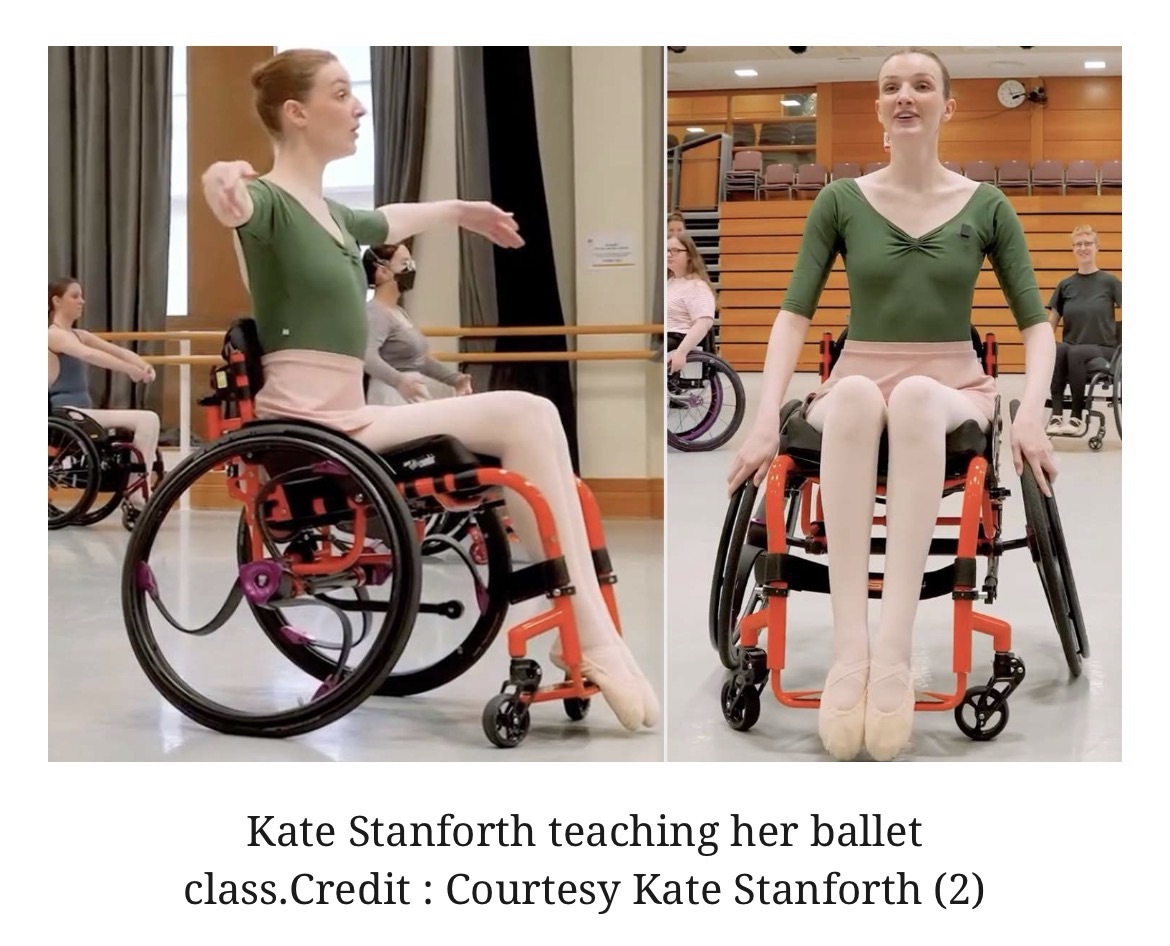
Kate Stanforth tells PEOPLE that disabled dancers are eager for professional-level ballet training, and her latest workshop selling out within minutes is proof
By
Published on June 11, 2026 05:04PM EDT

NEED TO KNOW
- A wheelchair ballet workshop held in collaboration with The Royal Ballet School sold out within minutes
- Kate Stanforth says dancers from around the world have reached out after seeing videos from the sessions online
- During one workshop, some disabled dancers experienced turning techniques for the first time
The June session sold out within minutes, but for ballet teacher Kate Stanforth, the waiting list tells an even bigger story.
After sharing videos from a series of workshops held in collaboration with The Royal Ballet School, the 32-year-old says messages began arriving from disabled dancers around the world asking the same question: How can they take part?
“Every clip we have shared from our collaboration with The Royal Ballet School has received a huge level of engagement, which has been incredibly encouraging,” Stanforth tells PEOPLE exclusively.
On Instagram, viewers connected with footage showing wheelchair users practicing ballet technique, learning turns and exploring classical movements in a professional training environment. According to Stanforth, many of the responses came from people who had never seen themselves reflected in traditional ballet spaces before.
“We’ve even had messages from people saying the videos inspired them to try dancing again after becoming disabled, which has been really moving to see,” she says.
The workshop that sparked so much attention focused on turns, including pirouettes and classical preparations adapted for wheelchair dancers. Throughout the day, participants explored musicality, upper-body control and timing while learning how traditional ballet principles could be translated into movement on wheels.
For Stanforth, one of the most memorable moments came when several dancers successfully completed turning exercises for the first time.
“When I said we had dancers turning for the first time, we really did, and it was as emotional as it was terrifying,” she says.
Those moments carried extra significance because access to appropriate equipment remains a major challenge for many disabled dancers. Stanforth explains that active wheelchairs can cost thousands, leaving many participants to train in heavier or less suitable chairs.
As a result, dancers often swap equipment during workshops or rely on spotters to safely attempt new skills. Despite those obstacles, she says the determination she sees in the studio continues to inspire her.

“Those first moments of turning are incredibly powerful, emotional, challenging and full of possibility,” she says.
Beyond teaching technique, Stanforth says creating a welcoming environment is one of the most important parts of the workshops. She notes that many disabled dancers, particularly ambulatory wheelchair users, worry about being judged when moving between standing and seated work.
In her classes, dancers are free to explore movement without feeling pressured to explain themselves. The goal, she says, is to ensure every participant feels they belong.
RELATED STORIES
She Was Running to Help a Patient When a Fall Left Her Disabled at 22 (Exclusive)Student Who Can’t Get Out of Bed Without Help Due to Disability Shares How She Manages While 12 Hours Away at College (Exclusive)
The response to the workshops has also reinforced something Stanforth already suspected: disabled dancers are actively searching for opportunities to train at a high level.
“The collaboration with The Royal Ballet School, alongside the fact that our sessions sold out within minutes, really highlights both the demand for inclusive, professional-level dance and how eager disabled dancers are to be welcomed into these spaces,” she says.
For years, she says she has heard from dancers who were rejected from traditional ballet classes despite wanting the same opportunities to learn and improve as their peers.
“What we see in moments like this is how much joy, freedom and artistry can emerge when those barriers are removed and dancers are genuinely given the opportunity to participate,” she says.
