

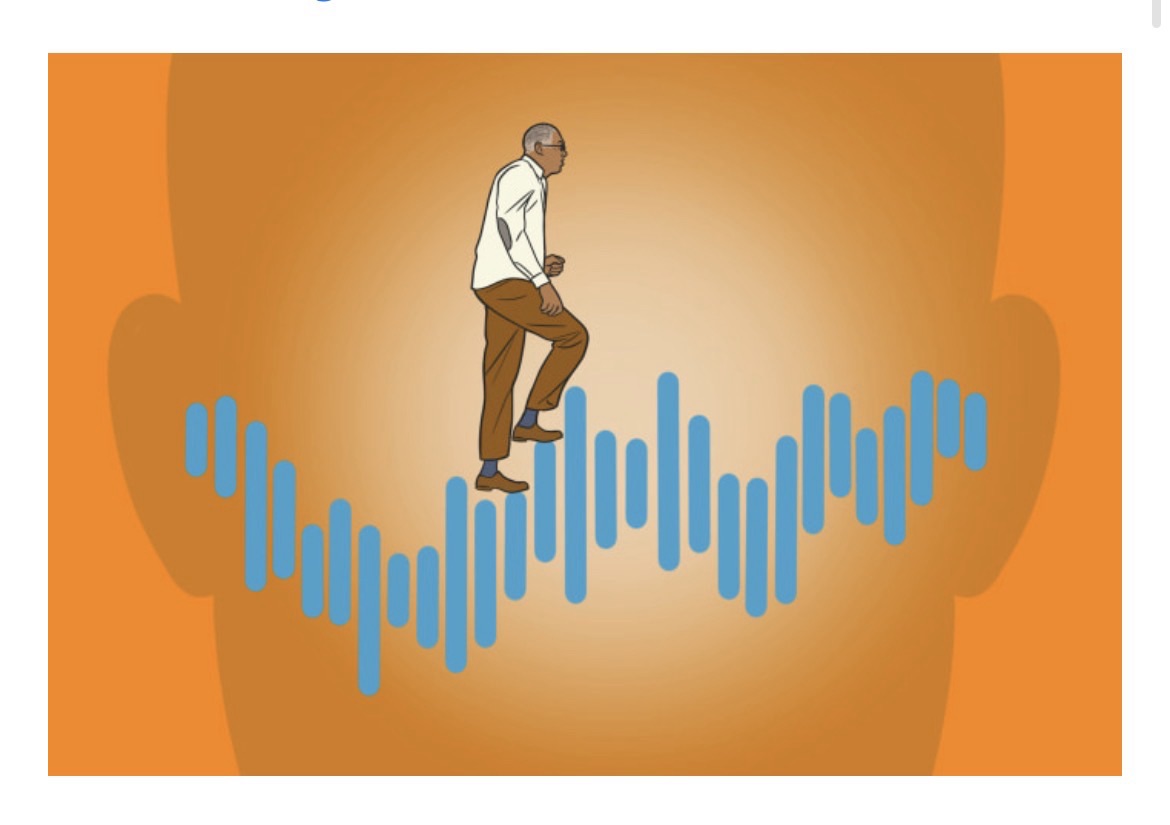
Apple’s hearing study used real-world data from more than 57,000 iPhone users to make an important health connection

By Julie JargonFollow
May 9, 2026 at 9:00 am ET
https://www.wsj.com/health/wellness/hearing-loss-walking-speed-iphone-study-c53c482a

JASON SCHNEIDER FOR WSJ
If you find yourself walking more slowly than you used to, it might be time to get your hearing checked.
A study of more than 57,000 iPhone users confirms a correlation between hearing loss and slower walking speeds. Previous studies have shown that hearing loss is associated with dementia, depression, loneliness and an increased risk of falling. Apple’sAAPL 0.60%increase; green up pointing triangle hearing study, conducted with the University of Michigan, is a significant contributor to the growing body of research.
It all points to one thing, say doctors: If you address your hearing issues, you could live a longer, healthier life.
The link between hearing and walking speed isn’t fully understood, but ear doctors say many factors are likely at play. One explanation is that hearing loss taxes the brain.
“When you can’t hear as well, your brain is working harder to hear—at the possible expense of your speed and gait,” says Dr. Frank Lin, a clinician on Apple’s health team who helped analyze the findings.
Inner-ear problems can also affect balance, and if someone is feeling dizzy or unsteady, they are likely to walk slower. Our ability to move confidently relies on subtle cues from our environment, such as hearing our own footsteps. If we aren’t receiving that auditory input, it can affect our walking speed, doctors say.
People who know they have reduced hearing might move more cautiously, and social withdrawal caused by hearing loss can also affect walking speed, doctors say.
So why does walking speed even matter? It’s considered an important indicator of overall health. A hale and hearty speed signifies that your body’s systems—including your heart, lungs, muscles and nervous system—are working well together.
“We call it the sixth vital sign,” Lin says.
A massive sample size
Apple has been studying various aspects of hearing, such as noise exposure, since 2019. The latest findings have been made possible by the 2024 introduction of Apple’s hearing test and hearing-aid features.
Apple so far has collected both hearing and walking-speed data from the devices of 57,183 people who agreed to share their information with Apple through Apple’s Research app. (You can still sign up to participate in the continuing study.) The walking-speed data reflects participants’ actual speeds in everyday situations whenever they have their phones. A person’s walking speed was calculated by taking the average of all available walking-speed measurements up to a year before and after taking a hearing test.

Apple’s Health app can show your walking-speed range over various time frames from a day to a year.
The massive real-world study served as resounding confirmation of past research: Not only does walking speed typically decrease with age, greater levels of hearing loss are linked with slower walking speed for adults of all ages. The biggest correlation is among people age 60 or older.
null
“The fact that we have objective information about hearing status and everyday walking at a scale like this is an exciting contribution and a powerful supplement to traditional public health,” says Dr. Carrie Nieman, associate professor of otolaryngology-head and neck surgery at Johns Hopkins University, who wasn’t involved in the Apple study.
If someone notices a decline in walking speed, checks their hearing and discovers a problem, hearing aids could help improve many aspects of health. What isn’t yet known, Nieman says, is whether hearing aids can improve gait and walking speed.
A three-year Johns Hopkins controlled trial showed that hearing aids significantly reduced the rate of cognitive decline among older adults at risk of dementia—and reduced the risk of falls.
“When it comes to other measures of physical activity, we haven’t seen changes or improvements in people wearing hearing aids,” Nieman says.
What you can do
Test your hearing…now. It’s important to get a baseline reading of hearing health before you think there’s a problem, says Lindsay Creed, associate director of audiology practices at the American Speech-Language-Hearing Association. “How will you know if there’s a change in your hearing if you didn’t know what it was before?” she says.
If you have an iPhone or an iPad running the latest iOS, along with a pair of second- or third-generation AirPods Pro, you can test your hearing without leaving home. Get in a quiet room, put in your AirPods and go to Settings. You’ll see your AirPods, and can tap in to its menu to take a hearing test. (It’s also in the Health app.)
Johns Hopkins University also has a free app to test hearing. It gives you a hearing number, the softest speech sound you can hear in each ear.
Apple’s Lin recommends testing your hearing annually—or sooner if you perceive any changes in hearing.
Track your walking speed. iPhone users can find their walking-speed data in the Health app (along with their walking steadinessscore). There are Android apps that do the same, as well as fitness trackers from Google (Fitbit), Garmin, Samsung and others.
Observe the trend. Track your gait for at least six months before you look for speed changes that you want to share with your doctor. Many variables can alter your pace from day to day or week to week. But a decline over time can signal a problem—whether it’s with your hearing or something
