

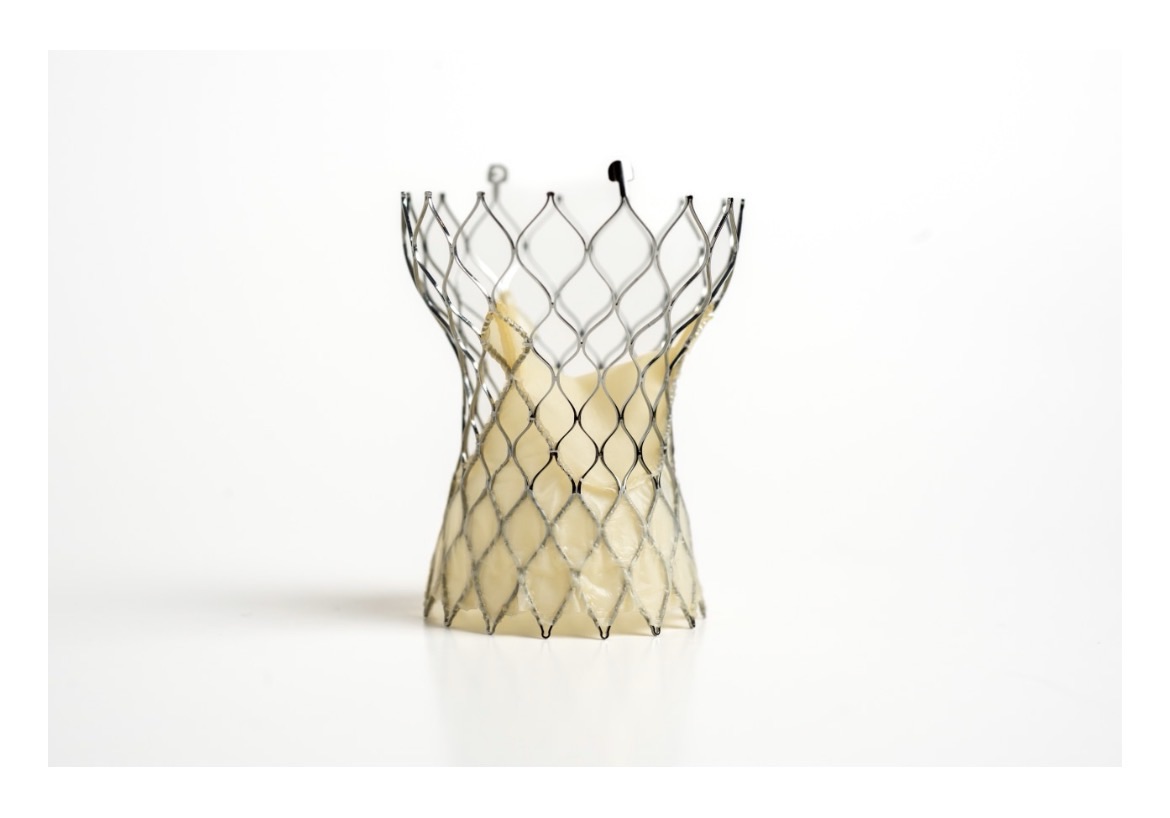
There are two options to consider if you need to have your aortic valve replaced

A transcatheter aortic valve replacement device is used in a procedure that is less invasive than traditional open-heart surgery EMILY ROSE BENNETT FOR WSJ
By Betsy McKayFollow
April 25, 2026 at 12:00 pm ET
If you have aortic stenosis and a doctor deems your condition severe, you likely will need to have your valve replaced. You may be offered a transcatheter aortic valve replacement, or TAVR, or a surgical aortic valve replacement, or SAVR. Here’s what you need to know.
Symptoms of aortic stenosis
Aortic stenosis is mostly a disease of aging, but it occurs in younger people too. More than 13% of Americans 75 and older have the condition, in which the aortic valve stiffens and narrows. That forces the heart to work harder and restricts the flow of blood to the body.
Symptoms of a severe condition include fatigue, shortness of breath, chest pain and a fluttering heartbeat. Many people with aortic stenosis are unaware or undiagnosed, according to the American Heart Association, which is working on helping people get better access to care.

A cardiac patient’s blood pressure, heart rate, and oxygen levels are monitored. MEGAN MAY FOR WSJ
It is possible to have severe aortic stenosis without feeling symptoms, with damage silently occurring to the heart. Left untreated, severe aortic stenosis can lead to heart failure and death.
If your doctor hears a murmur while listening to your heart, he or she will likely order an echocardiogram—an ultrasound of the heart that allows a doctor to diagnose the disease and determine care.
What is TAVR?
It is generally favored for patients over 80 years old, depending on their life expectancy, while SAVR, or traditional surgery, is recommended for patients under 65 unless they have a shorter life expectancy or health condition that makes surgery risky, according to guidelines from the American College of Cardiology and American Heart Association. Either can be considered for patients ages 65 to 80.
A heart team including an interventional cardiologist, cardiac surgeon and other specialists determines which treatment is best for a patient, depending on their health, anatomy and other factors. The decision about whether to get a TAVR or heart surgery is made with the patient.
How TAVR Is Performed
The procedure treats a condition in which the heart’s aortic valve narrows due to calcium buildup, making it harder to pump blood.
First, doctors make a small puncture in an artery, usually in the groin, and feed a catheter up into the patient’s heart.
A replacement valve, encased in a metal frame, is guided to the aortic valve.
The metal frame is expanded, pushing aside the old valve and sealing the replacement valve in place. The procedure typically takes one or two hours. Patients can usually go home within one to two days.
Source: Dr. Tsuyoshi Kaneko, Washington University School of Medicine. Graphic by Tonia Cowan, Josh Ulick and Peter Champelli/WSJ
TAVR vs. SAVR
Both are safe, according to cardiac specialists. Many doctors and patients like TAVR because it is a simpler procedure and doesn’t involve opening the chest and months of recovery time, like open heart surgery does. It is the only option for many who can’t undergo surgery.
“TAVR compared to surgery is so much more pleasant for the patient to go through,” said Dr. John Forrest, director of interventional cardiology at Yale New Haven Hospital.
But it isn’t for everyone, he said. Not all patients have the right size valve or other anatomical prerequisites. And younger, healthier patients have to plan for potentially another valve replacement down the road. With a 65-year-old patient, “there’s a likelihood that first valve you put in isn’t going to last until they’re 85,” Forrest said.
Planning what is next is important. TAVR valves and many surgical valves are made of animal tissue and deteriorate over time. It is possible to put a new TAVR valve inside the old one, but it can’t be done on everyone, and the data right now on how long the second valves last are limited.
A TAVR valve can also be taken out in a surgery called an “explant.” It is a riskier operation than putting in a surgical aortic valve replacement, though the risk has come down in recent years as surgeons have gained more experience. TAVR valves are also often implanted after surgical valves wear out.
Younger patients are getting TAVRs
Researchers and doctors are now studying how long TAVR valves last. While TAVR has been on the market for 15 years, the patients who got it the first few years were older and sicker, and many died before the valves wore out.
Now, younger, healthier patients get the procedure. Researchers are studying TAVR and surgical valves in this group in two clinical trials to last 10 years. So far, participants’ health outcomes are similar between the two types of valves, after six and seven years. Some doctors are concerned, though, by recent data from one of the clinical trials showing that Medtronic TAVR valves wore out faster than surgical ones.
Researchers aim to study the durability of TAVR valves further in patients under 65. They also want to learn more about the use of TAVR in people with a congenital heart defect that causes a misshapen, or “bicuspid” valve, common in patients under 65. It can lead them to develop aortic stenosis prematurely.
“We need to generate more evidence,” said Dr. Raj Makkar, director of interventional cardiology at the Cedars-Sinai Smidt Heart Institute, who is leading a planned clinical trial to study TAVR and surgery in 1,200 patients with bicuspid valves.
Heart surgery is also getting less invasive
Surgery is a better choice for a person under 65 who has a longer life expectancy, said Dr. Lars Svensson, chairman of the Cleveland Clinic’s Heart, Vascular & Thoracic Institute. Then, when that surgical valve wears out and they are older, they can get a TAVR, he said. Young people “should think with great caution about a TAVR just because of recovering a few weeks quicker,” he said.
Surgery doesn’t always have to mean opening the whole chest, Svensson said. Other options include a “J-incision aortic valve replacement” that he developed involving an incision of about 3 inches in the breastbone.
An emerging option developed at West Virginia University is a robotic aortic valve replacement. It involves a small incision in the patient’s side, near the armpit and is an option for patients who can’t have open-heart surgery or a TAVR, said Dr. Vinay Badhwar, executive chair of the West Virginia University Heart & Vascular Institute.
Surgical options for younger patients include a Ross procedure, in which a patient’s diseased aortic valve is replaced with their own healthy pulmonary valve, which in turn is replaced with a donor valve.
Younger patients can also get a mechanical valve that might last for life. One study showed a survival benefit for patients under 60 compared with tissue valves. Many don’t like it, though, because they then have to take blood thinners.
New heart valves are on the horizon
Companies and researchers are working on newer, longer-lasting alternatives to existing valves. Edwards Lifesciences is studying the long-term durability of a tissue technology it developed that is included in its latest generation of transcatheter and surgical valves. Results of a 10-year study of surgical valves with the technology will be released in early May.
The Medtronic TAVR valves used today are a newer generation than those in the clinical trial, which are no longer on the market, and the technique for implanting the valves has changed, said Dr. Kendra Grubb, chief medical officer of Medtronic’s structural heart business.
Medtronic is investing in new valve designs and tools to expand options and improve patient outcomes, Grubb said. It is also working on AI-based technologies to help doctors choose valves for individual patients. “The goal is to deliver more personalized care for patients throughout their lives,” she
